
NEWS & INSIGHTS
Chemical Industry Updates & Company News
Send Us A Message
Fungicide Programs for High-Humidity Crops: Timing, Coverage, and Risk Control
Fungicide Programs for High-Humidity Crops: Timing, Coverage, and Risk Control
High humidity changes the character of a crop-protection program. A field or greenhouse can look manageable in the morning and become a disease-risk problem after several days of wet foliage, poor air movement, warm nights, or interrupted spray access. Under these conditions, Fungicides are not simply agricultural inputs selected from a catalogue. They become part of a time-sensitive operating plan involving disease forecasting, labor allocation, application equipment, chemical compatibility, worker safety, and supply reliability.
For project teams responsible for large planting areas, contract growing operations, protected cultivation, or seasonal agricultural projects, the biggest losses often come from small failures that compound: a treatment is delayed because rain is expected, canopy coverage is uneven, the same mode of action is repeated too often, or a replacement product arrives after the practical treatment window has passed. A stronger fungicide program does not assume one product can solve every problem. It builds decision points before disease pressure becomes visible across the site.
Humidity Creates More Than a Disease Problem
Moisture-sensitive crops face a familiar pattern: leaf wetness lasts longer, spores germinate more easily, dense foliage dries slowly, and infection can move faster than scouting teams can document it. The exact disease pressure depends on crop species, local climate, field history, irrigation practice, and the pathogen present. In vegetables, fruit crops, ornamentals, and greenhouse production, growers may be concerned about mildew, leaf spots, blights, molds, or rots. The correct response is not to treat all symptoms as the same disease.
That distinction matters because fungicide selection, interval planning, and application placement depend on what is actually being managed. A contact material may protect exposed plant surfaces but will not move through new growth in the same way as a systemic or translaminar product. A product with useful activity against one disease group may be a weak choice for another. When diagnosis is uncertain, sending samples to a qualified local plant-health service or agronomist is usually less expensive than making repeated broad assumptions in the field.
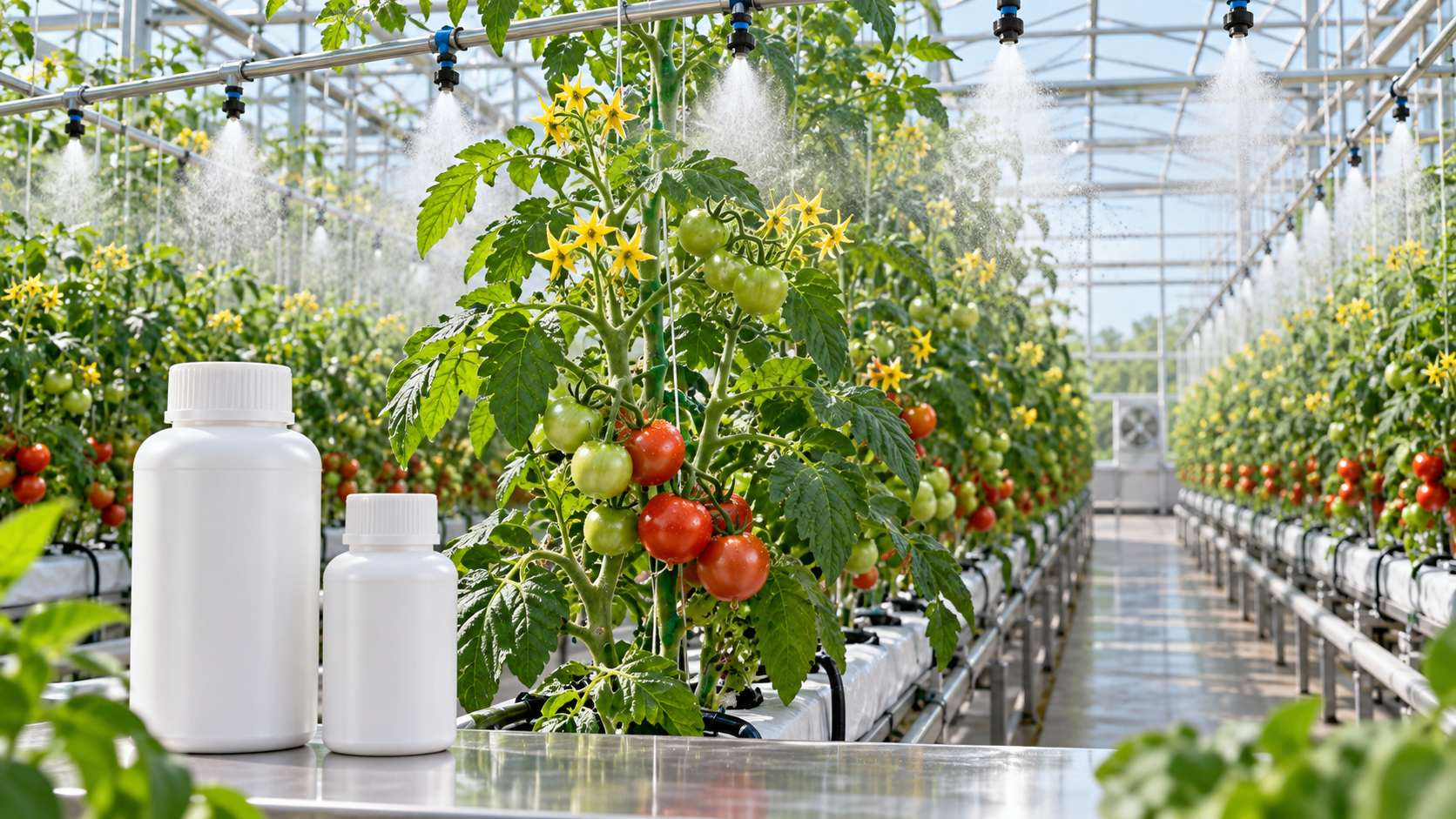
Humidity also creates a project-execution issue. Spray crews need dry enough conditions for safe, effective application, but disease risk rises precisely when access and drying time become unreliable. In protected cropping, the constraint may be condensation rather than rainfall. In open fields, it may be muddy access roads, wind, or a short gap between weather events. Programs should therefore be designed around operational reality, not only around the label interval printed on a product package.
Timing: Protect Before the Crop Is Already Under Pressure
The most common planning mistake in wet conditions is waiting for obvious symptoms before acting. By the time disease is visible across a canopy, spores may already be established beyond the most easily reached leaves, stems, clusters, or fruiting zones. Many Fungicides perform best as protectants, or at the earliest stage of infection, rather than as rescue treatments. That does not mean applying products on a fixed calendar without thought. It means using crop stage, local weather, field history, and scouting observations to define a practical protection window.
A useful program often starts with a pre-season risk review. Identify blocks with poor drainage, dense planting, persistent shade, overhead irrigation, known disease carryover, or limited machinery access after rain. Those areas should not automatically receive more chemical; they should receive more attention. Better drainage, pruning, sanitation, irrigation timing, row ventilation, removal of infected debris, and a realistic spray route can reduce reliance on emergency applications later.
During the season, treatment decisions should be tied to meaningful triggers. These may include extended leaf wetness, repeated rain, unusually humid greenhouse nights, rapid canopy closure, disease findings during scouting, or a forecast that indicates a likely infection period. The interval between applications should always follow the registered product label and local agronomic guidance. In high-pressure weather, a nominal interval may not be enough if the previous application was washed off, new foliage expanded quickly, or coverage was incomplete. Conversely, shortening intervals without a clear reason can increase cost, residue-management complexity, and resistance pressure.
Build a decision calendar, not a rigid spray calendar
The most workable schedules include checkpoints rather than blind repetition. Before a predicted wet period, confirm inventory, equipment readiness, sprayer calibration, crew availability, and the suitability of the planned active ingredient. After the weather event, inspect whether the canopy has expanded, whether spray deposits remain where they should, and whether symptoms have appeared in high-risk zones. This approach is particularly valuable when several blocks reach different growth stages at different times.
There is also a commercial timing issue. Agricultural chemical procurement cannot begin only when disease appears. Project procurement teams should establish approved alternatives in advance, especially where products are imported, packaged for local distribution, or subject to hazardous-goods handling requirements. An equivalent-looking product is not automatically a replacement: formulation type, registered use, concentration, packaging, compatibility, transport status, and label language can all affect whether it is operationally usable.
Coverage Is Often the Weak Link
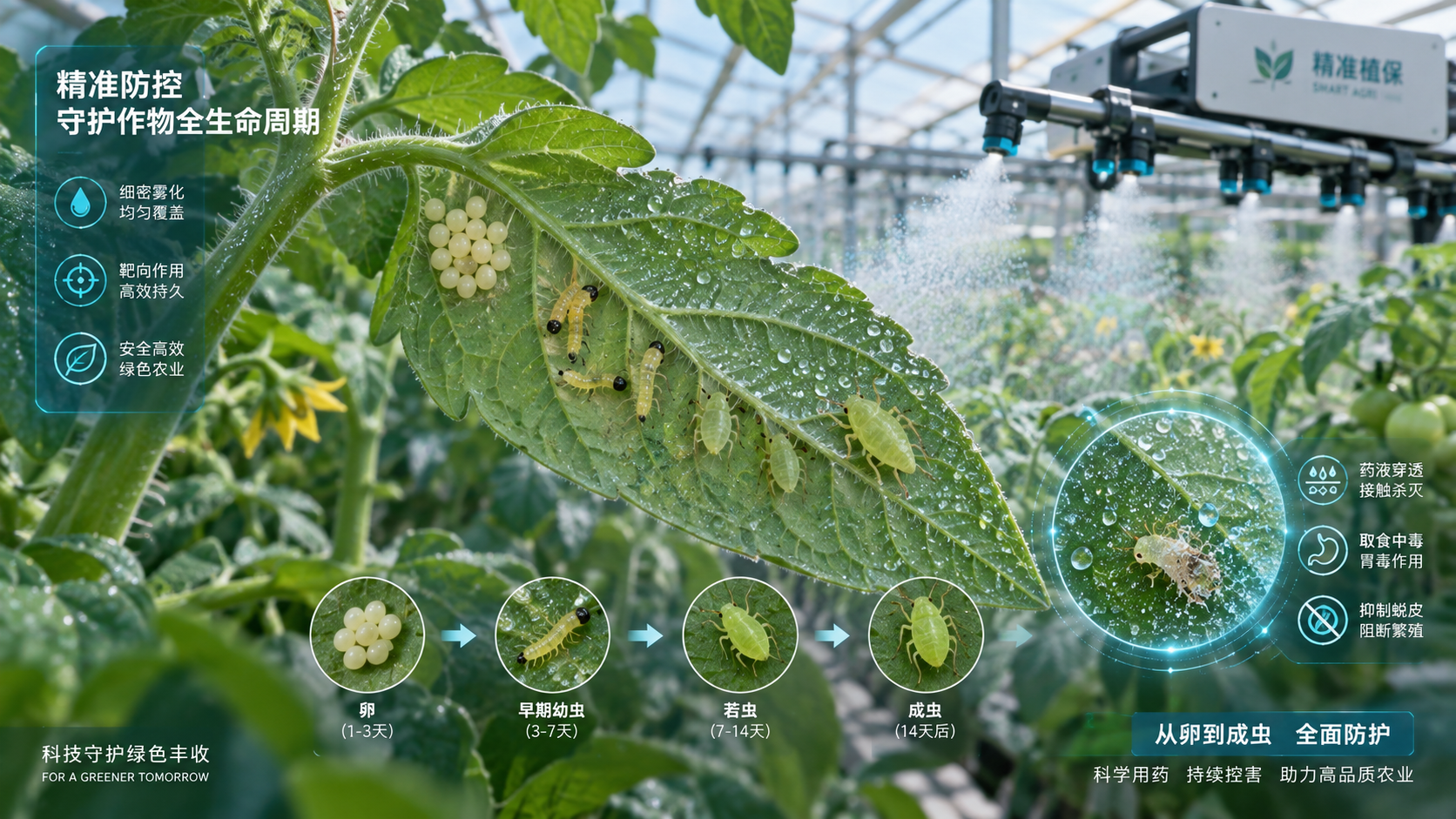
In humid crop systems, disease often begins where spray coverage is weakest: the underside of leaves, the interior of a dense canopy, lower foliage near wet soil, flower clusters, fruit zones, or sheltered greenhouse rows. A sound active ingredient cannot compensate for poor delivery. When teams say a fungicide “did not work,” the underlying issue is frequently incomplete penetration, unsuitable droplet behavior, inconsistent travel speed, blocked nozzles, incorrect pressure, or application made when foliage was already wet enough to promote runoff.
Coverage planning should match the crop architecture. Young, open canopies and mature, dense canopies are not sprayed in the same way. Air-assisted equipment, nozzle selection, water volume, boom setup, and travel speed should be assessed against the target area, not merely against hectares completed per hour. In orchards and vertical crops, penetration into the canopy matters. In low-growing row crops, the challenge may be reaching leaf undersides and keeping a consistent pattern across uneven terrain. Greenhouse crops may require particular attention to aisles, row ends, ventilation zones, and foliage layers hidden from a standard pass.
Calibration is a practical discipline, not a paperwork exercise. Flow rates change as nozzles wear. Filters collect residue. Different operators may drive at different speeds. Tank agitation may be inadequate for certain formulations. Checking these details before a high-risk period is far easier than explaining uneven control after a disease outbreak. Where permitted and appropriate, water-sensitive paper or another suitable coverage-check method can help crews see whether the intended spray pattern is reaching the target surfaces.
Resistance Management Is a Program Design Issue
Repeated use of the same fungicide chemistry can select for less-sensitive pathogen populations. This is not a theoretical concern to leave to the agronomy department; it affects purchasing, scheduling, stock allocation, and the ability to retain effective options over multiple seasons. Rotation should be based on fungicide mode-of-action groups, not only on brand names or label color. Products with different names may still rely on the same resistance-risk group.
A resistance-management plan should record the active ingredients and mode-of-action groups used in each crop block, the application date, disease target, weather context, and any performance concerns. This record becomes valuable when a program needs to change mid-season. It also helps prevent an all-too-common procurement error: buying a substitute that appears different but offers no true rotation value.
Use mixtures only where they are registered and agronomically appropriate. Tank mixing is not a shortcut around resistance management. Physical compatibility, crop safety, water quality, mixing order, label restrictions, and worker exposure requirements all need checking. Jar tests can indicate basic physical compatibility, but they do not prove crop safety or legal suitability. When there is doubt, follow the product label and obtain qualified local advice before treating a commercial area.
Make Supply Continuity Part of Disease Control
A fungicide plan can fail long before application if supply is treated as an afterthought. Seasonal demand, formulation availability, port schedules, customs documentation, package specifications, and local registration requirements can all influence what reaches the project site and when. This is especially relevant for cross-border procurement, where the commercially available material must also be lawful and practical to import, store, distribute, and apply in the destination market.
For overseas buyers, supplier evaluation should go beyond price per drum or per kilogram. Confirm the exact chemical identity, formulation, technical specification, batch documentation requirements, packaging format, shelf-life expectations, dangerous-goods classification where applicable, and the receiving country’s registration or import controls. Agricultural use is jurisdiction-specific. A material offered for industrial, technical, or intermediate use must not be assumed suitable for field application. Registration status and approved label uses must be verified locally.
Shandong Honghuida Chemical Co., Ltd. supports international chemical procurement and foreign trade services across a broad chemical portfolio that includes agrochemical-related supply needs. Its position in Shandong, with access to established manufacturing networks and port logistics, can be useful where buyers require coordinated sourcing, packaging discussions, quality inspection arrangements, shipping documentation, customs support, and destination-specific logistics planning. For fungicide-related transactions, the central discipline remains compliance: product specifications, hazardous-chemical handling, transport conditions, and destination-market rules should be confirmed before shipment is booked.
A Practical Control Routine for Wet-Season Operations
The best programs are usually quiet ones. They do not rely on dramatic rescue sprays because the team has already identified vulnerable blocks, maintained equipment, rotated eligible chemistries, and protected inventory availability. A short weekly review can keep this discipline intact:
- Review humidity, rainfall, irrigation, and leaf-wetness conditions alongside crop growth stage.
- Inspect high-risk zones first, including dense canopy sections, drainage-prone areas, and greenhouse rows with poor airflow.
- Check sprayer calibration, nozzle condition, agitation, filters, and the availability of clean water.
- Confirm that the selected product is registered for the crop, disease target, and intended use in the local market.
- Review the season’s mode-of-action record before approving the next application.
- Maintain a realistic contingency stock position, with verified alternatives rather than unapproved last-minute substitutions.
High-humidity disease management is ultimately a coordination task. The chemistry matters, but so do the timing of the decision, the quality of the application, the crop environment, and the reliability of the supply chain behind it. When any one of those elements is weak, even a well-chosen fungicide may underperform. When they are managed together, teams gain more control over a season that will never be fully predictable.
Send Us Your Inquiry Today
Honghuida Chemical is a professional chemical product supplier with ample stock of all chemical categories and excellent quality, welcome your purchase inquiry.